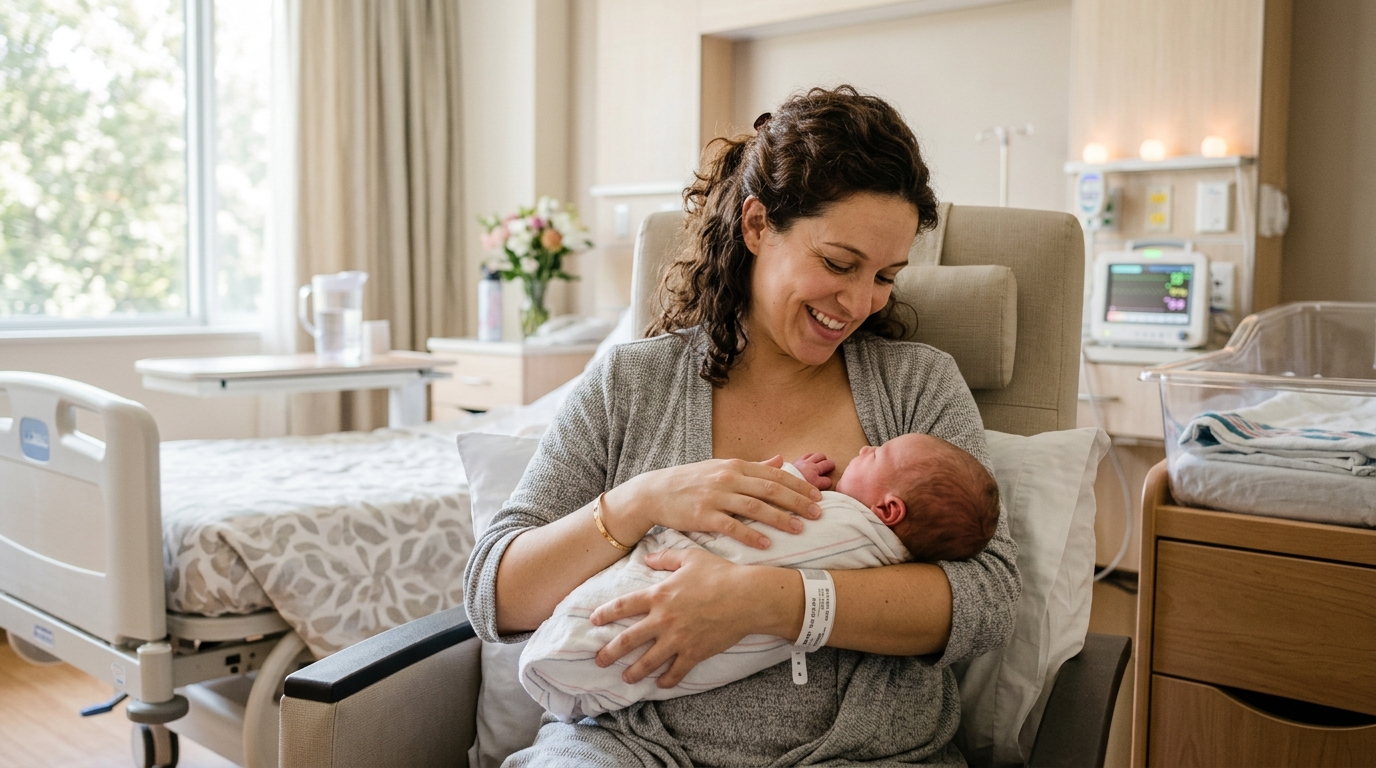
Understanding Your Delivery Options: Normal Delivery vs Cesarean Section
Preparing for childbirth is an exciting and transformative milestone. Expectant mothers often wonder whether a vaginal delivery (normal delivery) or a cesarean section (C-section) is the safest route for them and their baby.
Under the clinical guidance of Dr. Honey Gemavat, senior Specialist Obstetrician & Gynecologist practicing at Sanjeevani Hospital, SRV Hospital, and Cloudnine Hospital in Mumbai, the primary goal of modern obstetric care is always to support a safe, natural birth whenever clinically feasible, while having world-class surgical protocols ready if emergency indications arise.
What is Normal (Vaginal) Delivery?
A normal vaginal delivery is the natural physiological process of childbirth where the baby travels through the cervix and birth canal after labor contractions.
Key Benefits of Normal Delivery:
- Quicker Maternal Recovery: Most mothers can walk within a few hours and return to daily activities within 1 to 2 weeks.
- Shorter Hospital Stay: Typically requires 24 to 48 hours of postpartum monitoring.
- Natural Microbiome Transfer: The infant is exposed to beneficial maternal microbes during passage through the birth canal, supporting immune development.
- Enhanced Respiratory Transition: Labor contractions naturally clear amniotic fluid from the baby’s lungs.
- Reduced Risk in Future Pregnancies: Avoids uterine scar formation, making subsequent pregnancies simpler.
For detailed prenatal checkups, explore our Pregnancy Care Services and Normal Delivery Protocols.
What is a Cesarean Section (C-Section)?
A Cesarean Delivery (C-section) is a surgical procedure where the obstetrician delivers the baby through an incision in the mother’s lower abdominal wall and uterus. C-sections are classified into two categories:
- Planned (Elective) C-Section: Scheduled ahead of time due to known maternal or fetal factors.
- Emergency C-Section: Performed when unforeseen complications arise during labor.
Medical Indications for a C-Section:
- Cephalopelvic Disproportion (CPD): Baby's head size relative to maternal pelvis.
- Breech or Transverse Presentation: Baby is positioned feet-first or sideways.
- Placenta Previa: Placenta covering the cervical opening.
- Fetal Distress: Drop in baby's heart rate during active contractions.
- Prolonged Labor / Arrest of Dilatation: Inability of cervix to dilate safely despite augmentation.
- Previous Multiple C-Sections or Complex Uterine Surgery.
Learn more under our Cesarean Delivery Guide and High-Risk Pregnancy Care.
Comparison Table: Normal Delivery vs C-Section
| Parameter | Normal (Vaginal) Delivery | Cesarean Section (C-Section) |
|---|---|---|
| Type of Procedure | Natural physiological process | Surgical procedure |
| Anesthesia Used | None, or Epidural Analgesia (Painless Delivery) | Spinal or Epidural Anesthesia |
| Hospital Stay | 1 – 2 days | 3 – 4 days |
| Initial Recovery | 1 – 2 weeks | 4 – 6 weeks |
| Post-delivery Pain | Perineal soreness (mild to moderate) | Incisional pain & abdominal stiffness |
| Breastfeeding Initiation | Immediate (within 30–60 minutes) | Within 1–2 hours once stable |
| Future Birth Options | High likelihood of subsequent vaginal births | VBAC or Repeat C-Section |
Modern Options: Painless Normal Delivery (Epidural Analgesia)
Many expectant mothers in Mumbai fear normal delivery because of labor pain. Modern obstetrics offers Epidural Analgesia, often known as painless normal delivery. An epidural gently blocks pain signals from the lower spinal nerves while preserving maternal muscular control, enabling the mother to comfortably push during the second stage of labor.
Frequently Asked Questions (FAQs)
Yes. Vaginal Birth After Cesarean (VBAC) is a viable option for many women, provided the initial uterine incision was low-transverse and there are no recurrent obstetric complications. A comprehensive evaluation by an experienced obstetrician is essential.
Maintaining active pelvic floor conditioning (Kegel exercises), staying hydrated, attending prenatal walking sessions, managing gestational weight, and attending regular antenatal scans improve normal delivery outcomes.
Dr. Honey Gemavat conducts deliveries and surgical procedures at leading accredited hospitals including Cloudnine Hospital (Malad West), Sanjeevani Hospital (Malad East), and SRV Hospital (Goregaon West).

Dr. Honey Gemavat
Specialist Obstetrician, Gynecologist & Laparoscopic Surgeon practicing in Malad East, Mumbai. Committed to evidence-based maternal care and natural childbirth.